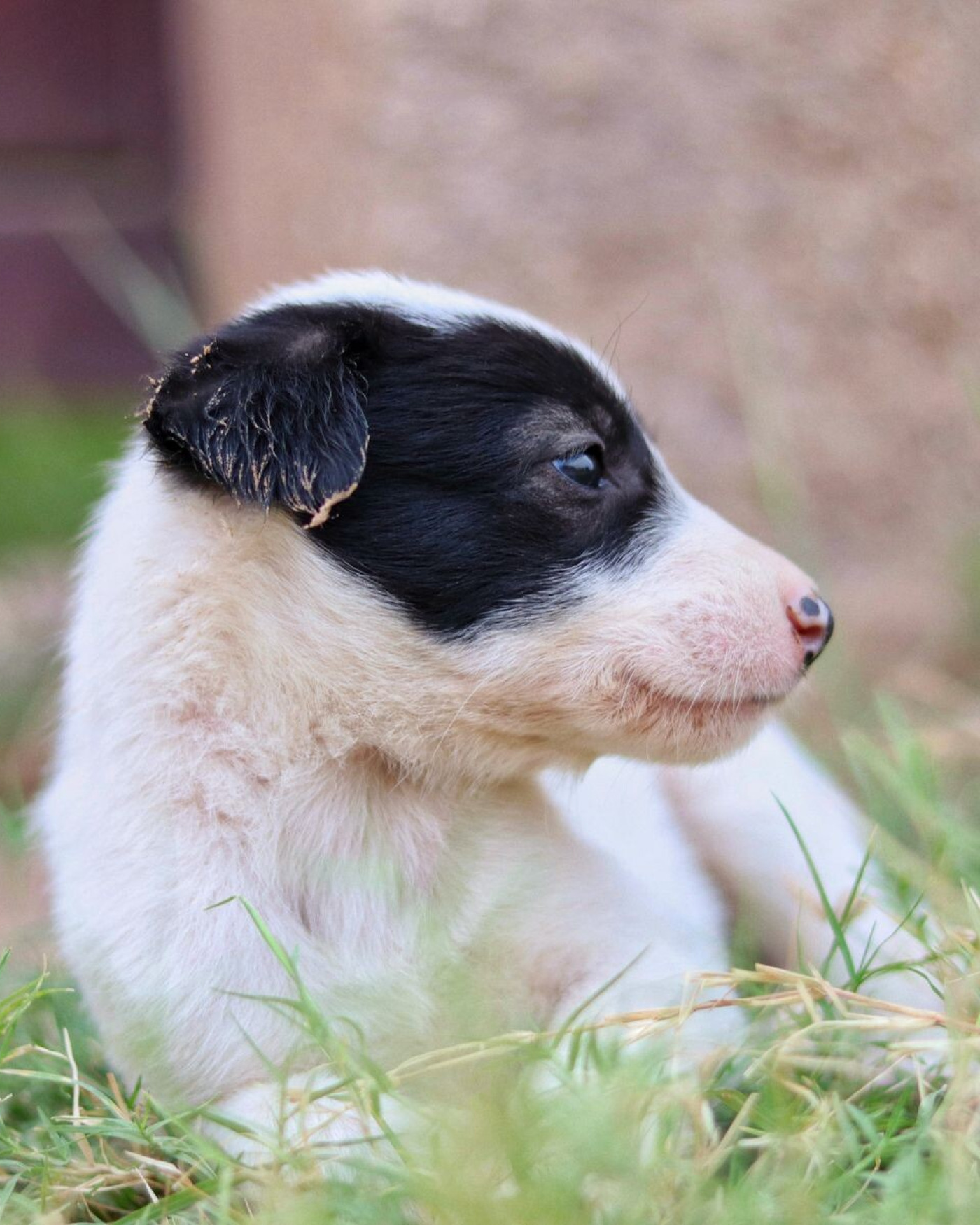
A puppy does not become house-trained after being corrected a few times. Learning happens because toileting outside is consistently rewarding and accidents indoors are prevented wherever possible. Young puppies are still developing bladder and bowel control, and they may not yet know how to signal that they need to go. A simple routine makes the process clearer for both of you.
Set realistic expectations
An eight- or nine-week-old puppy cannot hold on for long. Some quickly understand that outdoors is the right place, but may not be physically reliable for several months. A setback after a busy day, a food change or moving home does not mean that training has failed. Start when your puppy arrives and combine toilet training with the sleep and care routines in your puppy's first weeks at home.
Watch behaviour as well as the clock. Intense sniffing, circling, wandering away or suddenly stopping play may all mean that your puppy needs to go. Do not wait for whining at the door: that is another skill many puppies learn later.
Build a simple toilet schedule
Take your puppy outside after waking, eating, drinking and playing, and after excitement such as visitors. At first, extra trips every one or two hours may be necessary. Record meals, drinks and toilet trips for several days to reveal your puppy's individual pattern.
- Use the same quiet exit and a few safe toilet spots.
- Keep your puppy on a lead so the trip does not immediately become playtime.
- Wait calmly with little distraction until your puppy has finished.
- Allow some sniffing afterwards, so toileting does not always end the outing.
Avoid heavily used dog areas while your vet advises against them because of local infection risk. Check what protection your puppy has in the dog vaccination schedule.
Reward immediately, in the right place
Take small treats outside and reward as soon as your puppy finishes. Waiting until you are back in the kitchen rewards coming home, not toileting outdoors. You can calmly say a cue while your puppy goes; after enough repetition it may become useful when you need a toilet break on request.
The key is timing, not a noisy celebration. Punishment and startle methods are unnecessary and may teach a puppy to hide before toileting. If an accident happens in front of you, interrupt gently and go straight outside. If you find it later, clean it without comment. A puppy cannot connect delayed punishment with an earlier action.
Prevent accidents with supervision
Keep your puppy in the same room, use a puppy pen, or attach a light house line to a well-fitting harness when you cannot watch every second. A crate can become a sleeping place after positive training, but it must never be used to make a puppy wait longer than physically possible. Teach separation separately and in tiny steps; teaching your dog to stay home alone explains why suddenly leaving for hours can backfire.
For night-time trips, keep light and interaction low and follow the same route. If accidents occur at a predictable time, briefly set an alarm before that point and only move it later after several dry nights.
Clean thoroughly and adjust the plan
Use a product designed to break down urine odour and avoid strong ammonia smells. Then review what happened: was the interval too long, did you miss a signal, was the puppy overexcited, or did somebody change the feeding time? Improve the environment instead of blaming the puppy.
Going outdoors from the start is clearest for most households. Puppy pads can teach that toileting indoors is sometimes correct and may create a preference for soft surfaces. A temporary indoor spot can still be necessary in a high-rise building, during illness or on veterinary advice. Keep it in one place and move it gradually towards the exit when appropriate.
When to call your vet
Seek veterinary advice if your puppy frequently passes tiny amounts, strains, appears painful, has blood in the urine, drinks unusually much, has persistent diarrhoea or suddenly regresses after clear progress. An older puppy making virtually no progress despite consistent guidance also deserves an examination. Medical problems cannot be trained away.
House training is connected to the rest of the day. An overtired puppy misses signals and often becomes frantic or mouthy. Read how to manage normal puppy biting and how to socialise a puppy without overstimulation.
Sources
- LICG – Raising a puppy (accessed August 2026)
- LICG – House soiling in dogs (accessed August 2026)
- American Veterinary Society of Animal Behavior – Housetraining Tips (accessed August 2026)
- AVSAB – Humane Dog Training Position Statement (accessed August 2026)