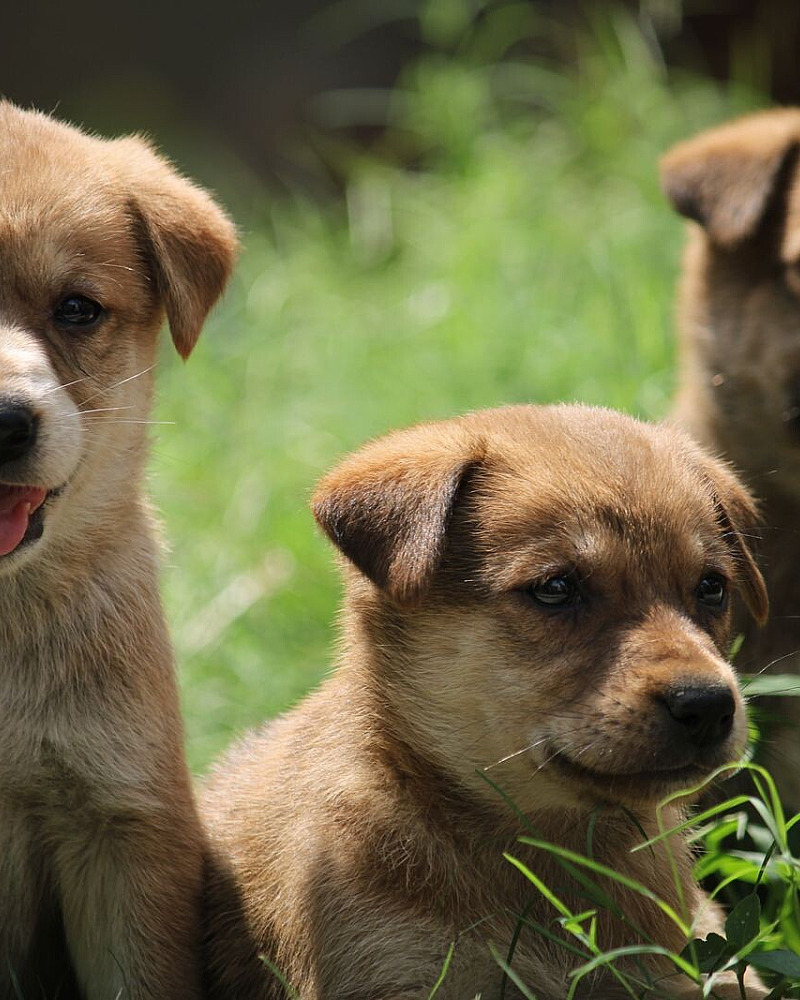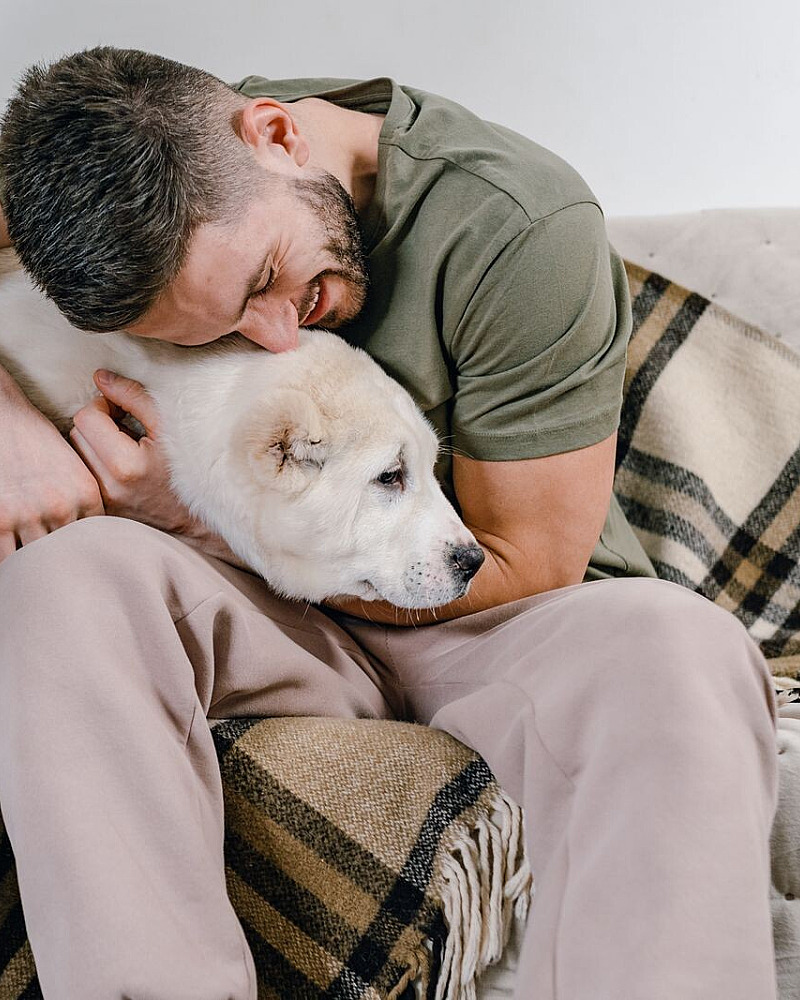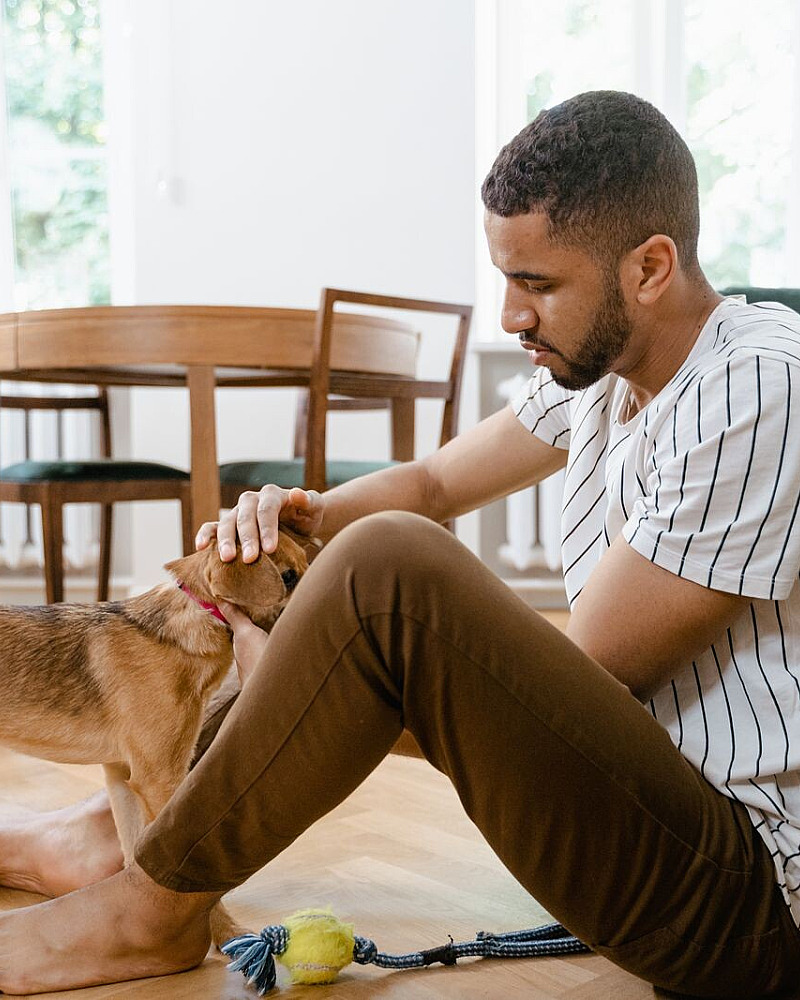
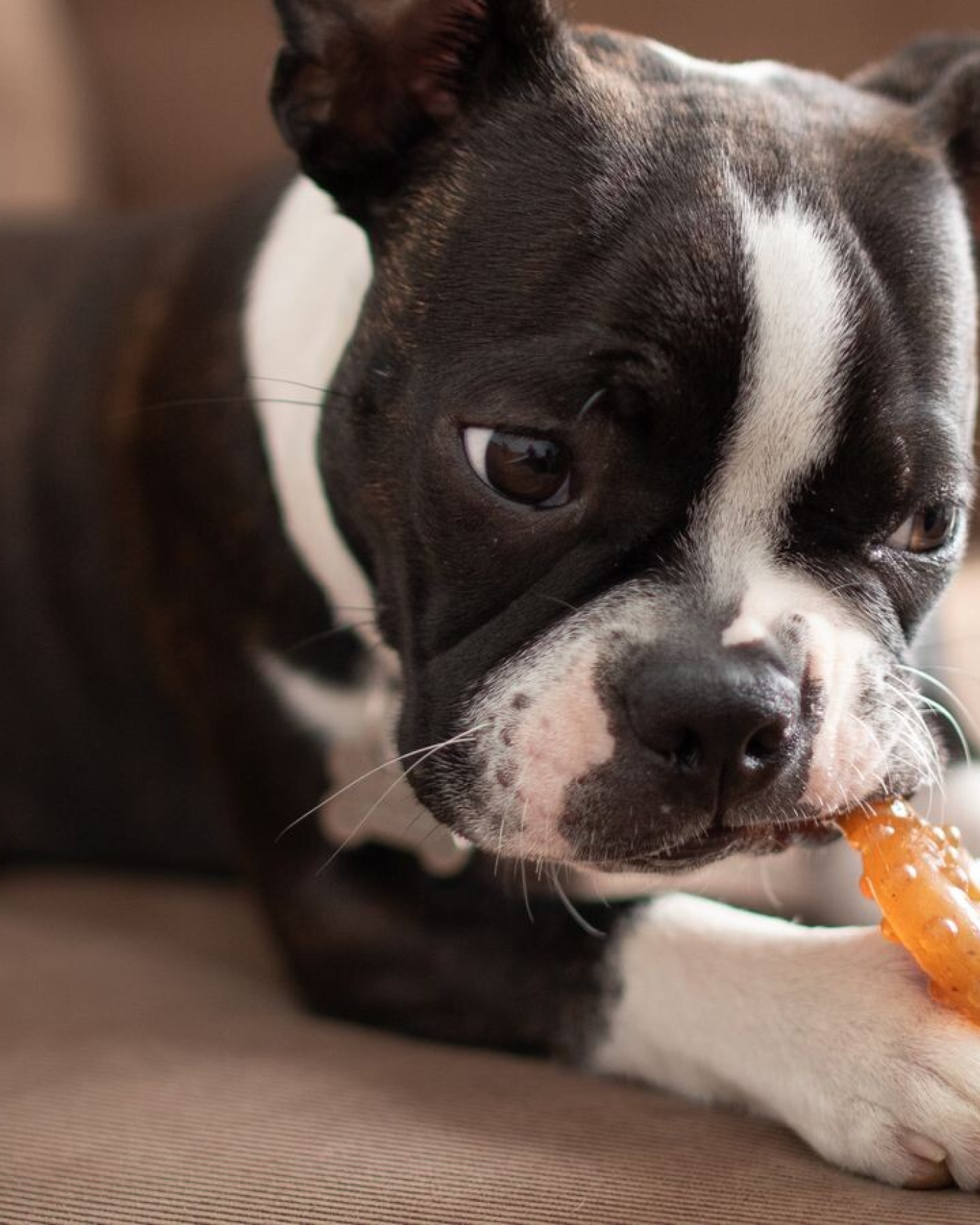
Puppies explore with their mouths, play with their teeth and still need to learn how delicate human skin is. Mouthing is normal, but that does not mean you must simply endure it. The aim is not to punish every touch of the mouth. Teach your puppy to control bite pressure and show which behaviours earn play, attention or an appropriate chew.
Why puppies bite
Play biting is part of development. A puppy's mother and littermates react when a bite is too hard; people continue some of that learning at home. Teething, frustration, hunger, needing the toilet and tiredness can all increase biting. Look at what happened beforehand: were there busy visitors, did play last too long, or did the puppy really need sleep?
A puppy who turns into a small crocodile every evening often needs rest rather than a longer, wilder walk. Young puppies sleep for much of the day. Build a manageable rhythm with your puppy's first weeks at home.
Keep hands and clothing out of the game
Play with long, soft toys that keep teeth away from hands. Keep several safe chewing options nearby and rotate them. If a moving trouser leg attracts your puppy, stop moving instead of pulling away faster. Fast movement makes you part of the game.
- Keep play sessions short and pause before your puppy becomes overexcited.
- Do not let children run, shriek or wrestle with hands.
- Use gates or a pen to give children and puppy space without angry handling.
- Offer age- and size-appropriate chews under supervision.
A predictable day of sleep, toilet trips and short learning sessions prevents many difficult moments. If accidents add to the chaos, follow the guide to house-training your puppy.
Teach that gentle play continues
When a bite hurts, make your hand still and briefly end the interaction. Stand up or step behind a gate for a few seconds. Resume when the puppy is calm and offer a toy. Hard biting then ends social play, while calmer behaviour creates another opportunity.
A brief sound stops some puppies but excites others. Choose the response that produces the calmest result. If you repeat the interruption several times within minutes, end the session and help your puppy sleep. Holding the mouth closed, pinning the puppy down, tapping the nose or shouting can create fear or defensive behaviour and does not teach the desired alternative.
Redirect before teeth make contact
The best response starts a second earlier. When your puppy fixes on hands or clothing, cue a simple behaviour they already know or scatter a few pieces of food on a sniffing mat, then provide a suitable toy. Reward useful choices made without prompting: four paws on the floor, settling beside you and choosing a chew.
Redirecting is not bribery when it happens early. You are changing the situation and reinforcing an alternative. If the favourite toy only appears after a hard bite, however, the puppy may learn the chain “bite, then toy”.
Teething, chewing and guarding objects
The urge to chew may increase during teething. Provide varied textures, inspect toys for loose pieces and simplify the home for a while: put shoes away, protect cables and block access to furniture legs. Trade a forbidden object for something better instead of chasing. That prevents running away with stolen objects from becoming a game and reduces pressure around possessions.
Children need active supervision
Active supervision means an adult is close enough to intervene, not watching from another room. Teach children to leave the puppy alone while sleeping, eating or chewing. They can move a toy along the floor or help scatter treats, but hands should not be toys. Use a secure gate whenever direct supervision is unavailable.
Socialisation also means learning that touch is safe and predictable. Work in short sessions and respect looking away, freezing or moving away. Learn more in socialising your puppy without overstimulation.
When biting needs professional help
Ask your vet and a qualified reward-based behaviour professional for help if the puppy repeatedly causes injuries, stiffens or growls around handling and possessions, cannot settle, suddenly changes, or may be in pain. Growling is information, not disobedience to punish. Create distance, prevent a repeat and investigate the cause.
Progress comes through maturity, consistent guidance, sufficient sleep and suitable chewing—not in one weekend. Train staying home alone separately so a crate or pen never becomes a punishment area.
Sources
- LICG – Puppy learning and behaviour (accessed August 2026)
- LICG Minder Hondenbeten – Socialisation and bite inhibition (accessed August 2026)
- AVSAB – Humane Dog Training (accessed August 2026)
- AVSAB – Starting Off on the Right Paw (accessed August 2026)