A tarantula looks like an easy pet. It makes no noise, never needs a walk and only eats a few times a week. Still, it is an animal for people who prepare well. A female can live for decades, the terrarium has to be warm and humid enough, and a tarantula is an animal to watch, not to hold. In this article you read what to arrange in advance, how to care for the spider and how to protect yourself from urticating hairs and bites.
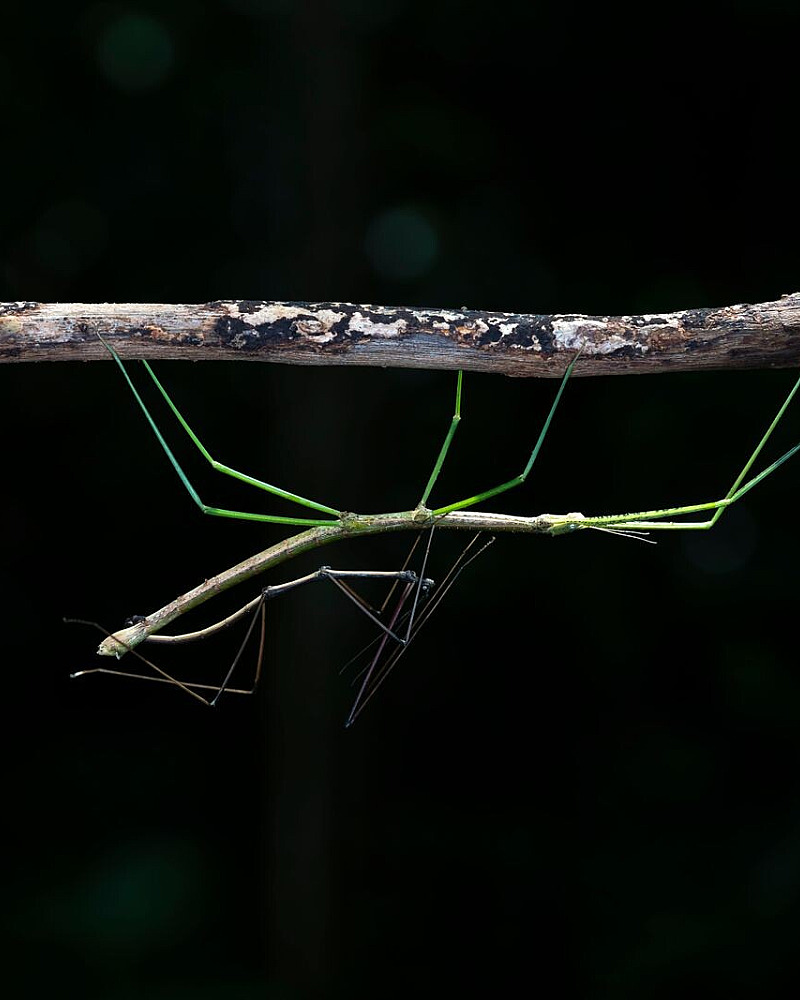
A tarantula lives in a terrarium, just like a reptile, so much of the basic knowledge is the same. Also read the basics of setting up a terrarium, how to spread heat in a terrarium and why the origin of an exotic animal matters in captive-bred or wild-caught. Already familiar with stick insects? You will notice that a tarantula is very different on a few points.
Is a tarantula right for you?
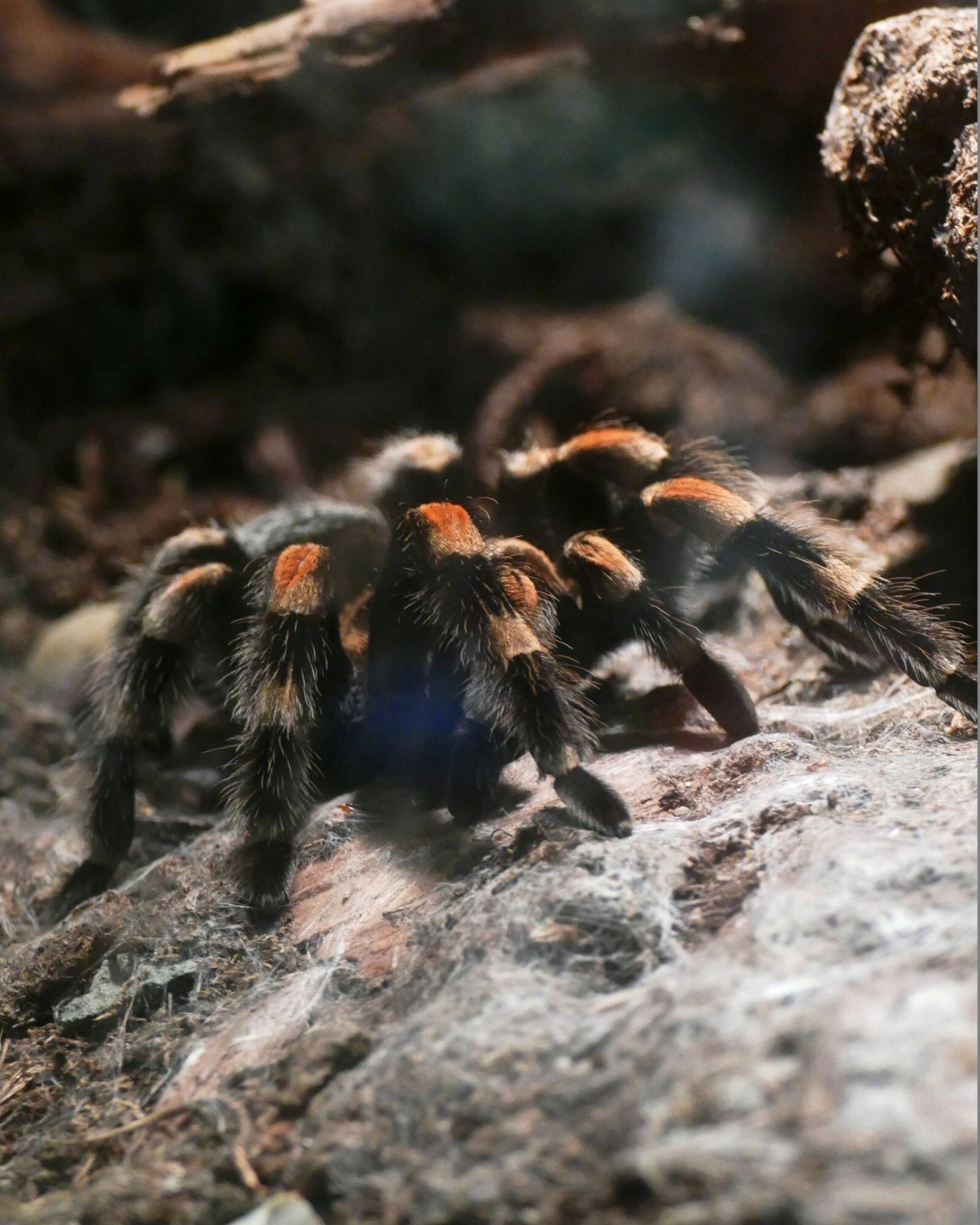
The LICG (the Dutch information centre for pets) calls the Mexican redknee tarantula (Brachypelma smithi) a suitable spider for beginning spider keepers, although this species also asks for some experience. An adult measures fifteen to eighteen centimetres including its legs. A tarantula has four pairs of eyes, but sees poorly. It mainly senses vibrations.
Think carefully about the lifespan above all. According to the LICG, females of this species live 25 to 30 years. Males live about four to seven years and usually die within two years of reaching adulthood. If you buy a young female, you are choosing care that lasts for decades.
Another commonly kept species is the Chilean rose tarantula (Grammostola rosea). A medical article describes this species as generally docile, and therefore popular with hobbyists: more than 600,000 were traded worldwide in 2020. Docile does not mean harmless, as you will read below.
The LICG does not consider the redknee tarantula suitable for children. A tarantula is not an animal to stroke, and if you want to pick up your pet often, a different animal suits you better.
Setting up the terrarium
Always keep a tarantula on its own. The LICG advises housing every spider separately. For an adult redknee tarantula, the LICG gives a terrarium of about 40 x 30 x 30 centimetres. This is how to set it up:
- Substrate: a layer of (peat) soil about ten centimetres deep, so the spider can dig.
- Hide: for example an upturned flower pot.
- Temperature: between 22 and 27 °C during the day, not below 18 °C at night. In winter the LICG gives 22 to 25 °C.
- Humidity: 60 to 70 percent.
- Water: a shallow water dish that you refresh at least once a week.
Remove droppings and prey remains regularly. According to the LICG, a full clean of the whole terrarium once or twice a year is enough.
A bare box is not enough. In a first, small study with Brazilian black tarantulas (Grammostola pulchra), researchers compared a standard box of 27 x 27 x 21 centimetres with one piece of cork bark to a box about six times larger with more hides, branches and (artificial) plants. In the large, richly furnished box the spiders used 77 percent more space. In the standard box, the odds of a spider sitting on the wall were about four to five times higher. Falls were rare, and only happened from the walls. The researchers write that more variety in the enclosure may improve welfare. The study looked at a different species and a small group of animals, but it points in a clear direction: give your spider structure and places to hide.
Feeding
According to the LICG, a redknee tarantula eats once or twice a week, usually one to three crickets or grasshoppers. An adult spider can be given a nestling mouse or rat a few times a year. The spider only eats live prey.
- Is the spider not eating for a while? That is often normal. According to the LICG, a tarantula can fast for days or even months before a moult.
- Expect a small regular cost: according to the LICG, feeder insects cost a few euros per tub.
Moulting: do not disturb
A tarantula grows by shedding its old skin. That is the most vulnerable moment in its life. According to the LICG, you can recognise an upcoming moult by these signs:
- the spider stops eating;
- it sheds urticating hairs in the terrarium;
- its skin turns darker.
During the moult the spider often lies on its back. It looks as if it is dead, but that is normal. Leave it completely alone, keep the humidity at the right level and do not give live prey that could injure the soft spider.
Does the moult go wrong, is the spider injured, or does it stay limp and listless for a long time? Then contact a vet with experience in exotic animals.
Urticating hairs: protect your eyes
Many tarantulas from North and South America, including the redknee and the Chilean rose tarantula, have urticating hairs on their abdomen. A review of eye complaints describes them like this: the hairs are 0.06 to 1.5 millimetres long and barbed. When the spider feels threatened, it flicks them into the air with a quick movement of its back legs. On the skin they cause an itchy, red rash. In the eye they can penetrate deeply and cause inflammation.
The authors advise working with gloves and goggles, and children only under the supervision of an adult. In practice:
- Do not hold your face over the open terrarium.
- Do not rub your eyes while you are busy with the spider or the terrarium.
- Wash your hands after cleaning, because a tarantula also sheds urticating hairs in the terrarium.
- Eye trouble after contact with a tarantula? See your GP or an eye doctor and mention that you keep a tarantula.
Bites and venom
Every tarantula has venom. According to the LICG, the venom of the redknee tarantula is not very strong, but a bite is painful and, like a wasp sting, can be fatal if an allergic reaction occurs. A medical article describes bites from American tarantulas as generally benign in humans, but fatal to small animals such as household pets. So keep other animals away.
Even a docile species can cause serious symptoms. The same article describes a woman who was bitten on the forearm by a Chilean rose tarantula. Within a few hours she developed severe muscle cramps, which lasted four weeks. According to the authors, cramps can start later and last for weeks.
Some species are far more venomous. The Indian ornamental tarantula (Poecilotheria regalis) is also kept as a pet in Europe. Research describes how a bite can lead to hot flushes and then severe muscle cramps and aches in the arms and legs, with signs of muscle damage. There is no antivenom; doctors can only relieve the symptoms. A species like this is not for a beginner.
Bitten and getting more than some local pain, or do the symptoms persist? Call your GP or the out-of-hours GP service.
Picking it up? Better not
It is best not to pick up a tarantula. The LICG advises always working with tweezers and not with your bare hand. If the spider needs to be moved, for example while cleaning:
- gently tap it in the right direction with tweezers;
- catch it safely with a transparent plastic container;
- work calmly and wear gloves and goggles, because of the urticating hairs.
A tarantula is an animal to watch. If you enjoy that, it will give you a lot of pleasure.
Mites and other problems
According to the LICG, mites are common in tarantulas. The LICG describes placing the spider temporarily in an empty plastic container and removing the mites with a small brush with a little petroleum jelly, staying away from the mouth. Then clean the terrarium. You can also use predatory mites. According to the LICG, do not use chemical pesticides. In doubt, or is the spider becoming listless or thin? See a vet with experience in exotic animals.
CITES: ask for the papers
Since 1995, all species that then belonged to the genus Brachypelma have been listed on Appendix II of CITES, the convention on trade in endangered species. Researchers name habitat loss and the collection of spiders for the illegal trade as the main threats. There is also legal captive breeding, for example at Mexican breeding facilities, but according to the researchers the demand from the hobby is still higher than the legal supply.
According to the LICG, the redknee tarantula is listed on CITES Appendix II. The LICG advises asking for the CITES papers when you buy one. According to the RVO (the Netherlands Enterprise Agency), you can look up which European annex applies to a species in the Species+ database, using the scientific name. For animals on Annex B, the RVO says you do not need an EU certificate if you can prove that you bought or received the animal legally. You can do that with, for example, a proof of purchase, an import permit or a breeder's or transfer declaration. If you cannot prove it, you do need a certificate. So keep the papers for as long as you have the spider and hand them over if you sell it. Read more about how CITES works in CITES for reptiles.
For mammals, the Dutch list of permitted pets (Huis- en hobbydierenlijst) has applied since 1 July 2024. There is no such list for spiders at the moment, but according to the LICG lists for other animal groups will probably follow in the future. Rules change: check the current situation with the RVO and the LICG before you buy or sell a tarantula.
What to look out for when buying
According to the LICG, a redknee tarantula costs a few tens of euros. For the terrarium and the furnishings, expect a few tens of euros each as well. When buying, pay attention to these points:
- ask for the scientific species name, so you know which climate and behaviour to expect;
- ask whether the animal is captive-bred and take the papers that prove its legal origin;
- ask for the sex, if known, and take the lifespan of a female into account;
- as a beginner, do not choose a species known for strong venom;
- set up the terrarium and let it reach temperature before you collect the spider;
- arrange someone who can give water and food while you are on holiday, and who knows not to pick the spider up.
A low price without papers for a CITES species is a warning sign. Precisely because illegally collected spiders are traded, a seller who cannot show where the animal comes from is not a good choice.
Finding or offering a tarantula
Is everything ready? Then browse the tarantulas and other invertebrates on Nestjes. Offering a spider yourself? State the species name, whether the animal is captive-bred and which papers you hand over.
Sources
- LICG – Mexicaanse roodknievogelspin (Mexican redknee tarantula) (accessed October 2026)
- PubMed Central – Tarantula welfare may be improved with greater environmental complexity: A preliminary behavioral study with Brazilian black tarantulas (Grammastola pulchra) (accessed October 2026)
- PubMed Central – On the Dangers of Tropical Spiders as a Pet: A Review of Ocular Symptoms Caused by Tarantula Hairs (accessed October 2026)
- PubMed Central – A Case Report of Delayed, Severe, Paroxysmal Muscle Cramping After Chilean Rose Tarantula (Grammostola rosea) Envenomation (accessed October 2026)
- PubMed Central – Indian Ornamental Tarantula (Poecilotheria regalis) Venom Affects Myoblast Function and Causes Skeletal Muscle Damage (accessed October 2026)
- PubMed Central – Species conservation profiles of tarantula spiders (Araneae, Theraphosidae) listed on CITES (accessed October 2026)
- RVO – Welk CITES-document heeft u nodig? (which CITES document do you need?) (accessed October 2026)
- RVO – CITES-soort of niet (CITES species or not) (accessed October 2026)
- LICG – Dieren die als huisdier zijn toegestaan (animals permitted as pets) (accessed October 2026)