Stick insects are quiet, cheap and take up little space, so they are often seen as the ideal first pet. That is partly true: the Indian stick insect asks little. But even this species depends entirely on you for fresh leaves, the right humidity and enough height to moult. And because many females lay eggs without a male, you quickly end up with more animals than you planned.
Stick insects live in a terrarium, just like reptiles, so a lot of basic knowledge overlaps. Also read the basics of setting up a terrarium, how to spread heat in a terrarium and why the origin of an exotic animal matters in captive-bred or wild-caught.
Which species suits a beginner?
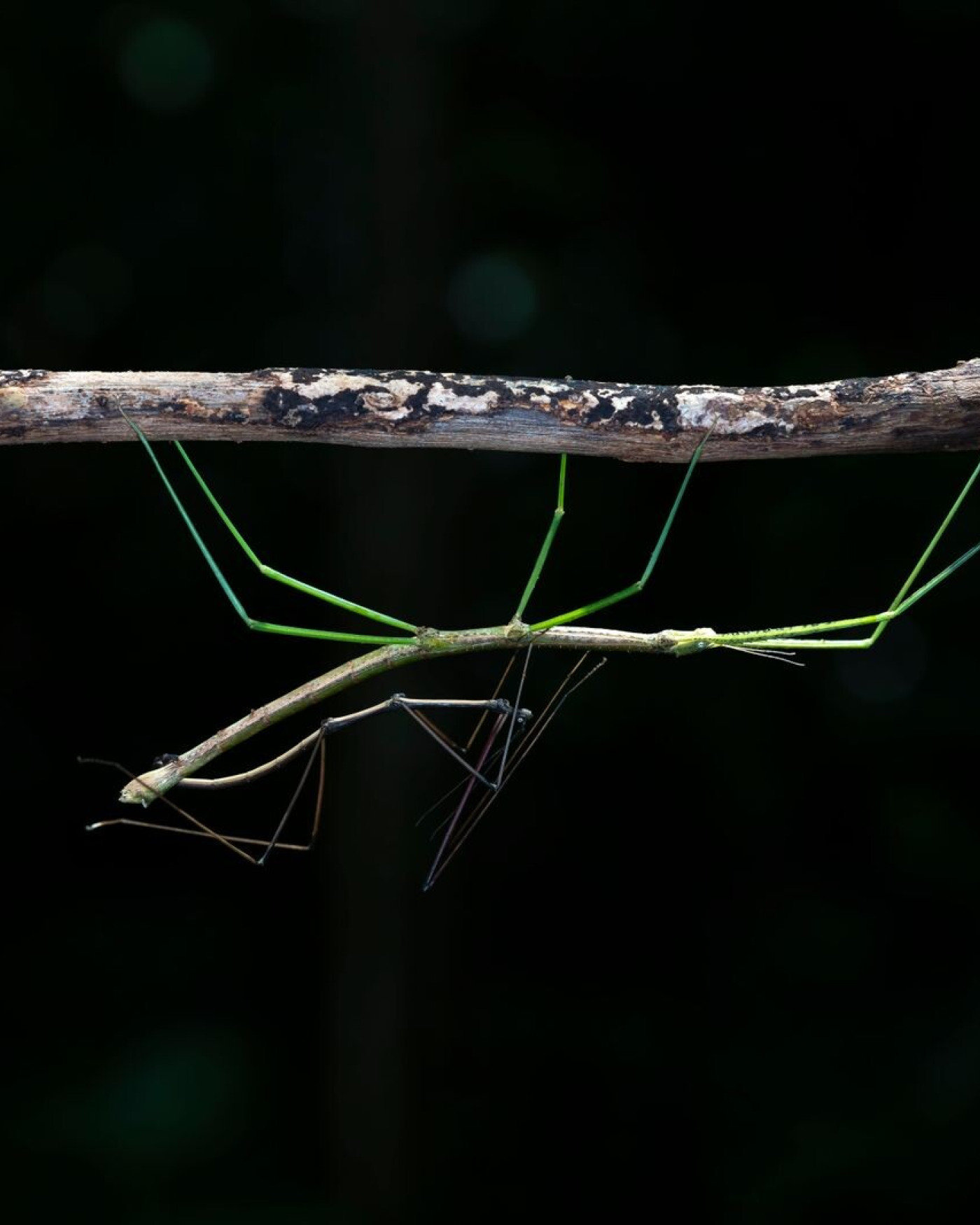
There are more than 2000 species of stick insect, from a few centimetres to as much as 55 centimetres long. The Dutch pet information centre LICG calls the Indian stick insect (Carausius morosus) the easiest species: you need little experience to keep it. According to the RSPCA, an adult Indian stick insect is about 7.5 centimetres long after five or six moults and lives for about a year.
Other species sometimes live only a few months, while some reach a few years of age. Females usually live longer than males. If you choose another species, first find out which climate and food it needs. Some species can bite or pinch, which is usually harmless. Species of the genus Anisomorpha can spray acid; the LICG recommends safety goggles when you handle them.
Keep stick insects with other stick insects, not with other kinds of insects. Different stick insect species can sometimes share an enclosure, but not every combination works.
The enclosure: height matters more than you think
Stick insects need room to climb and to moult. The LICG advises an enclosure at least three times as high and twice as long as your largest animal. If the enclosure is too low or too small, the RSPCA says an animal may not be able to climb out of its old skin. With too little space, animals may also attack and even eat each other.
- Location: indoors, in a warm place, out of direct sunlight.
- Temperature: most species do well between 20 and 28 °C, but this differs per species.
- Humidity: many species want high humidity. Mist the enclosure daily with a plant sprayer set to a fine mist, not a hard jet. Other species belong in a dry enclosure with good ventilation.
- Floor: for example sand, bark, humus or sphagnum moss. The RSPCA recommends paper that you replace every week.
- Climbing: a cork back wall or loose branches give grip.
Stick insects drink little. If you mist the terrarium, the LICG says the droplets that remain are enough for them. Note that diarrhoea can be a sign that the enclosure is too damp or that you are offering the wrong food plant. Keep the terrarium clean and well ventilated, because otherwise mites can affect the animals.
Food: fresh leaves without poison
Stick insects only eat plants. Bramble leaves are eaten by almost all species. According to the RSPCA, the Indian stick insect also eats privet, hawthorn and rose. For young nymphs you can trim the edges of the leaves a little.
- Make sure food is always available, and keep it fresh by standing the twigs in a pot of water.
- Cover the pot so no animals can fall in and drown.
- Mist the leaves daily and, according to the RSPCA, replace them every week.
- Never use plants that have been treated with insecticide. A stick insect that twitches has, according to the RSPCA, probably eaten sprayed leaves and is unlikely to survive.
Eggs: the biggest pitfall
In most species, females can reproduce without a male. This is called parthenogenesis. A female lays one to fifteen eggs a night, and fifty to a thousand in total per laying period. Depending on the species, they hatch after two to twelve months. The young (nymphs) then moult about five or six times and are adult within three to six months.
If you do nothing, you will soon have far more animals than the terrarium can hold. The LICG advises keeping only a small share of the eggs and removing the rest. The RSPCA says eggs should be collected and carefully destroyed. Never throw eggs or animals outside and never release them. The Indian stick insect originally comes from India and has already been introduced by people to places including the United Kingdom, Germany, California, Florida and South Africa.
When cleaning, also make sure you do not throw animals away with the old leaves. They are well camouflaged and easy to overlook.
Moulting and handling
Leave an animal alone during and just after moulting and certainly do not lift it. The new skin is soft and easily damaged, and that can be fatal. If you want to move a stick insect, preferably let it walk onto your hand. If you do have to pick it up, do so gently between the first and second pair of legs. The RSPCA recommends picking them up with an artist's paintbrush.
If a young animal loses a leg, it grows back after one or more moults. In an adult, a lost leg no longer grows back.
Buying or taking over
Eggs are available from about ten cents each, animals from a few euros. Rare species cost more. A terrarium costs tens to hundreds of euros, depending on its size and the climate the species needs. When buying, pay attention to the following:
- ask for the species name, so you know which climate and food are needed;
- check whether the terrarium the animals come from is well kept and whether the animals are undamaged;
- set up the enclosure and a supply of food before you collect the animals;
- transport them in a sturdy, ventilated container with leaves and never leave them in the car on warm days;
- arrange for someone to care for the animals every day while you are on holiday.
Since 1 July 2024 the Netherlands has had a pet and hobby animal list (Huis- en hobbydierenlijst). It sets out which mammals you may keep. There is currently no such list for insects, but according to the LICG lists for other animal groups will probably follow. So check the current rules with the LICG or the Dutch government before you acquire a new species.
Finding or offering stick insects
Is everything ready? Then browse the stick insects and other invertebrates on Nestjes. Do you have too many nymphs yourself? Offer them in an advert and warn buyers honestly that they can expect a lot of eggs.
Sources
- LICG – Wandelende tak (stick insect) (accessed September 2026)
- RSPCA – Handle with care: Stick insects (accessed September 2026)
- PubMed Central – Identification, rearing, and distribution of stick insects of Madeira Island (accessed September 2026)
- LICG – Animals allowed as pets (accessed September 2026)