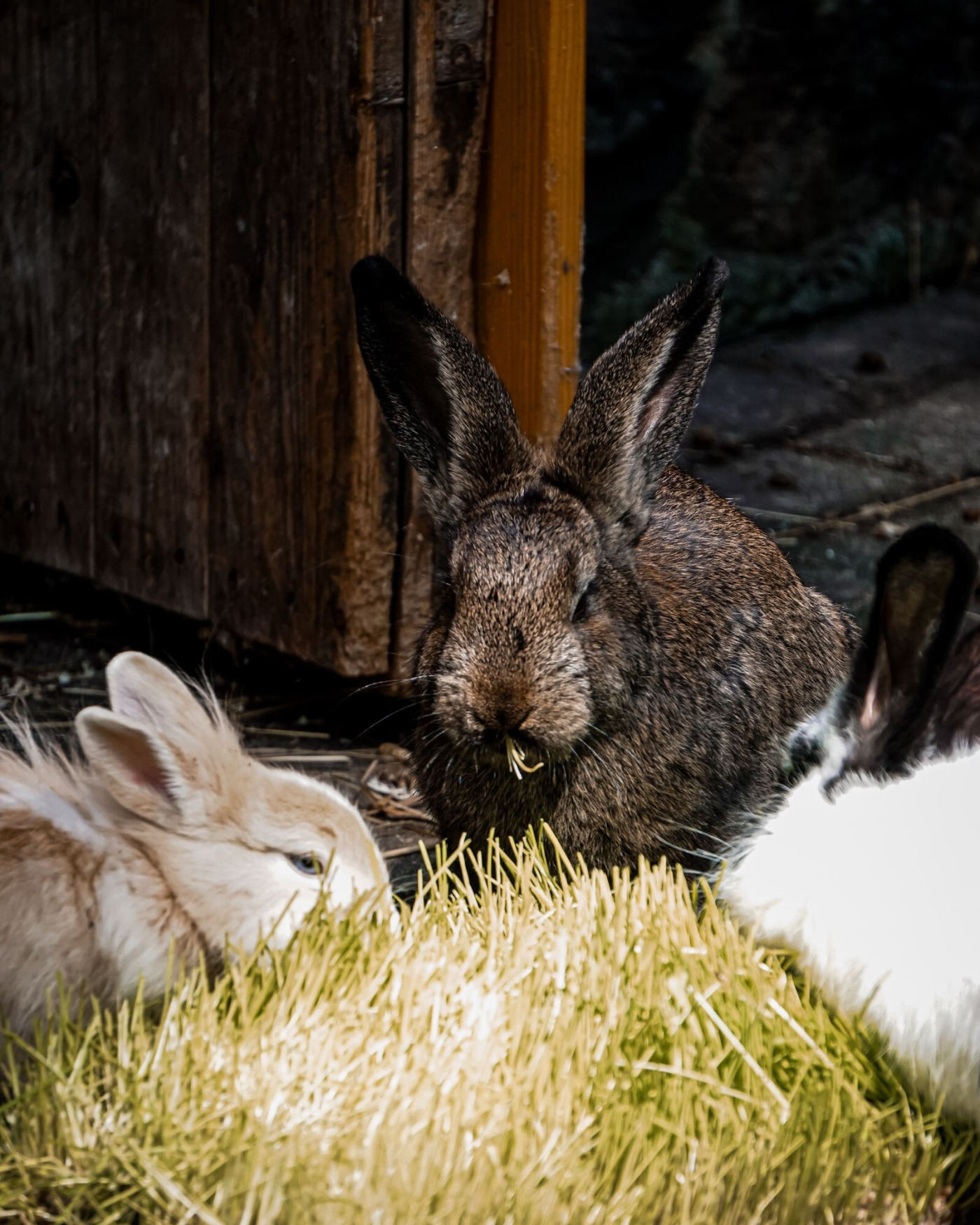
Rabbits are still often sold alone and far too young, with a lonely or sick animal as the result. Anyone selling rabbits themselves can do better than the average pet shop, and buyers increasingly look for exactly that. This article covers the three points that make the difference: age, company and information.
Legally 6 weeks, better 8
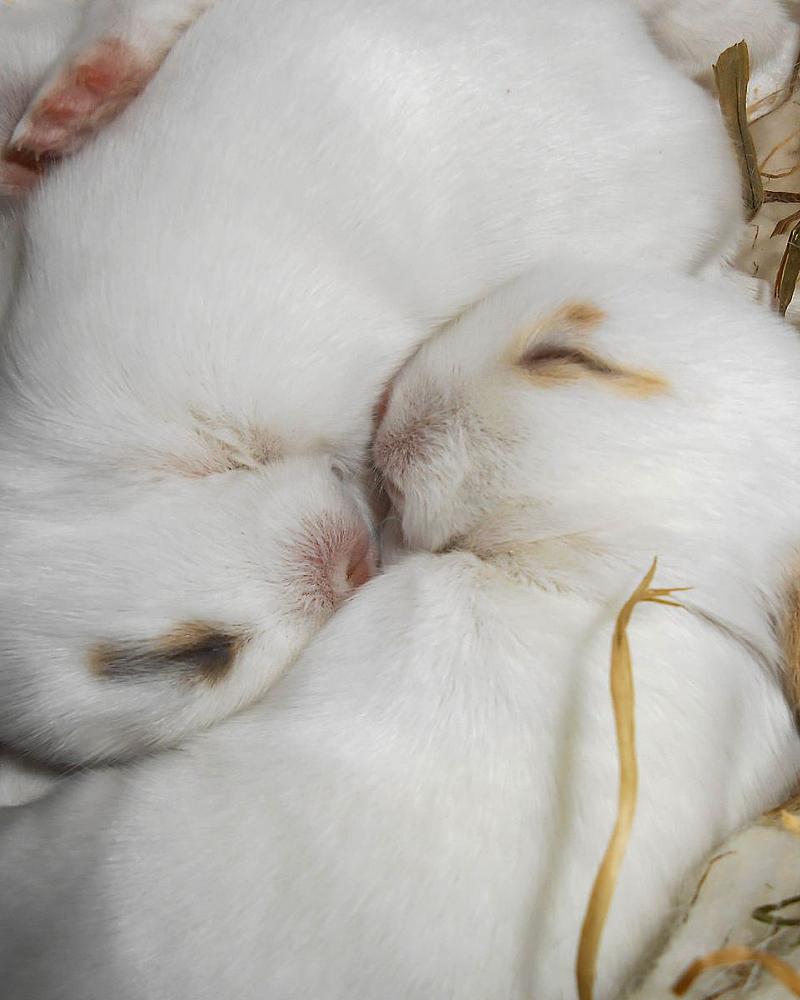
Under article 1.20 of the Dutch Animal Keepers Decree young rabbits may not leave their mother before 6 weeks; the LICG names the same limit. Better wait until 8 weeks: the switch from milk to solid food is then complete and the gut flora more stable, and digestive problems around weaning are the main cause of death at this age. How to care for a litter in the first weeks is explained in caring for young rabbits. Separate the sexes in time: according to the LICG rabbits are fertile from three to five months, large breeds somewhat later.
Preferably in pairs
Rabbits are social animals. Offer young rabbits in pairs where possible, for example two sisters or a brother and sister with the buck neutered in time. If you sell a single rabbit, state that it needs a companion and point buyers to bonding rabbits. A buyer looking for "one for the children" deserves a conversation, not a quick sale.
Health and vaccination
State whether the rabbits are vaccinated against myxomatosis and RHD, and if so, which vaccine and when. Both diseases are almost always fatal; since 2020 there is a combination vaccine against myxomatosis and both RHD variants that works for one year, so the vaccination must be repeated yearly; read RHD and myxomatosis in rabbits. A chip is not mandatory for rabbits.
What belongs in your advert
- Breed or cross, date of birth and sex per rabbit.
- Whether they are offered in pairs or singly, and whether the buck is neutered.
- Vaccination status against myxomatosis and RHD.
- Where they grew up: indoors, outdoors, used to handling.
- What they eat, so the buyer does not switch food all at once.
- Photos of the young and of the mother.
Choosing buyers
Ask about housing: how much space, indoors or outdoors, and whether there is already a rabbit. Well-prepared buyers have often read the rabbit buying checklist; point them to it if not. A small amount per rabbit covers the vaccinations and prevents impulse buys.
A fair price
A pet-shop rabbit easily costs several tens of euros, while private owners often give their young away for free or for a tenner. That low amount looks kind, but it attracts exactly the impulse buyers who want to get rid of a rabbit again after the summer holidays. Ask an amount that covers the vaccination and the food and explain in your advert what it is for. For a pedigree rabbit or a rare colour a higher price is normal, as long as you can show the lineage. What not to do: give a discount because someone "will take two then". That is the good outcome, not a bargaining chip.
The handover
At collection, send along a bag of the familiar food and some hay so the buyer can make the switch over a week. Write down the vaccination dates and the name of the vaccine, or hand over the vet's vaccination booklet. Put the rabbits in a sturdy, closed carrier, not a cardboard box; a startled rabbit is gone in seconds. Agree that the buyer gets in touch if it does not work out, and say that you would rather take a rabbit back than see it end up in a shed somewhere. A short written agreement with date, amount and both names prevents discussion afterwards.
Posting an advert
The selling rabbits page summarises the rules and lets you post an advert for your rabbits for free.
Sources
- Besluit houders van dieren, article 1.20 (minimum age for separating animals) (accessed September 2026)
- LICG – Acquiring a rabbit (accessed September 2026)
- LICG – Rabbit care leaflet (accessed September 2026)
- LICG – RHD (VHD) in rabbits (accessed September 2026)