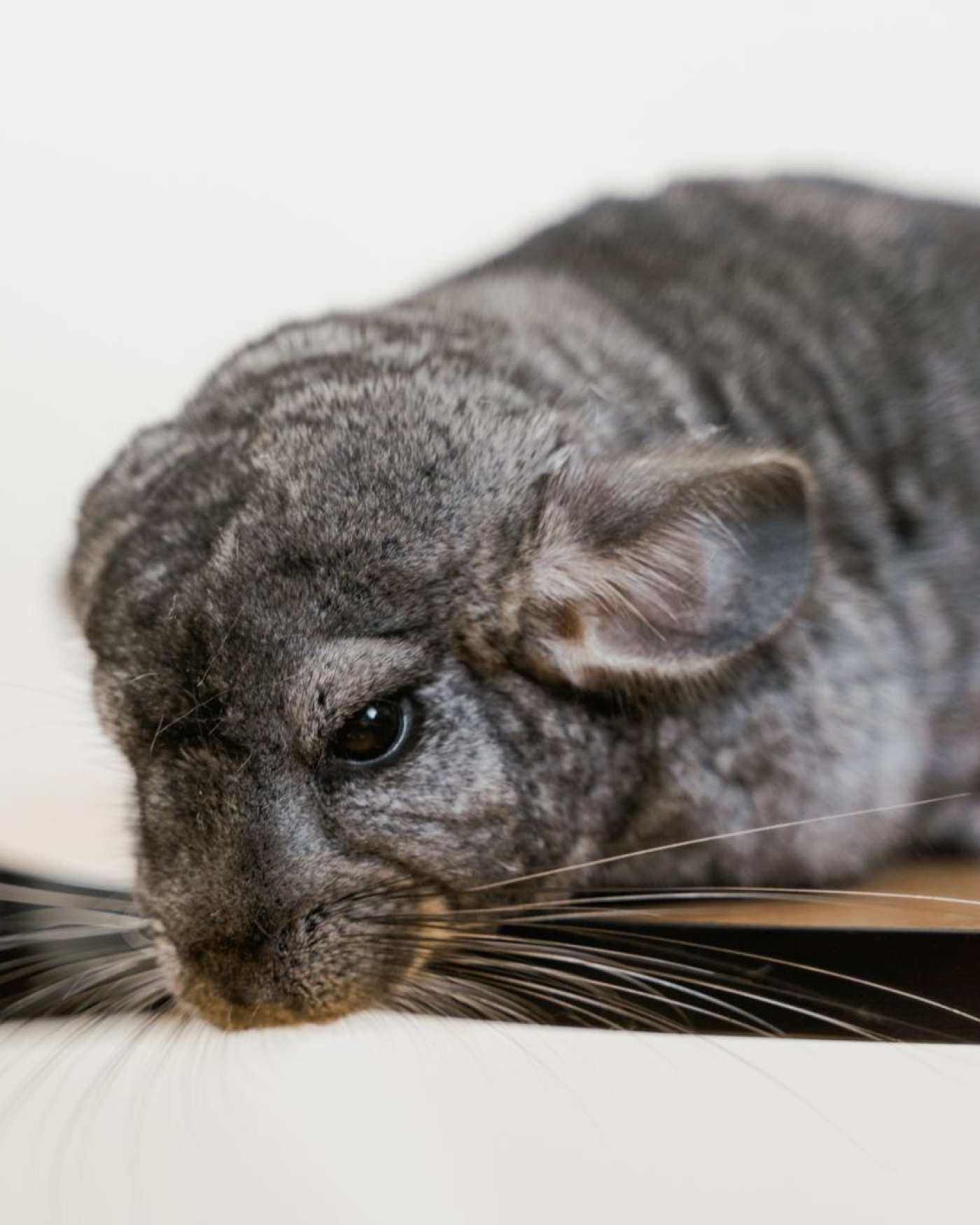
A chinchilla is soft, curious and can live for ten years or more. But since 1 July 2024 it is no longer an ordinary pet in the Netherlands. The chinchilla is not on the Dutch list of permitted pets and hobby animals (huis- en hobbydierenlijst), and that did not change in 2026. A chinchilla you already had may stay. Breeding a new chinchilla or simply buying one is not allowed. This article explains what the rules mean if you have a chinchilla or want to take one over, and how to care for it properly.
Chinchillas have different needs from most rodents. For the basics, also read why the shop cage is often too small and how to sex rodents, because with a chinchilla you really must prevent unplanned litters. Like rabbits, chinchillas cope badly with heat: the tips in keeping rabbits cool in hot weather help here too. Looking for a rodent for the family? Have a look at guinea pigs or rats.
The pet list: what does it mean for chinchillas?
The list of permitted pets and hobby animals has applied since 1 July 2024. According to the RVO (Netherlands Enterprise Agency), it contains 30 mammal species that are suitable to keep as a pet or hobby animal. The chinchilla is not one of them. According to the LICG, only mammals on the list may still be bred or imported after that date.
There was hope that the chinchilla would be added after all. On 28 May 2026 the Trade and Industry Appeals Tribunal (CBb) gave its ruling. The list stays, but the state secretary had to reassess six species, including the chinchilla. According to the Dierenbescherming (Dutch Society for the Protection of Animals), this had to happen within thirteen weeks. The RVO reports the outcome: the state secretary decided that none of the six species will be added to the list. So the chinchilla stays off the list.
Do you already have a chinchilla?
Then you may keep it, if you can prove that you already had it before 1 July 2024. This is the transitional right. As proof, the RVO mentions for example a purchase receipt, a microchip, a pet passport or a vet's invoice. Keep such papers safe.
There is one strict condition: you must make sure your chinchilla cannot have young. If you do not, the transitional right no longer applies, according to the RVO. The LICG therefore advises not to keep females together with unneutered males. Unsure about the sex of your animals? Have a vet check it.
Taking over or rehoming a chinchilla
You may sell or give away a chinchilla that falls under the transitional right. The RVO adds: pass on the proof as well, because the next owner must be able to show it. So if you take over a chinchilla, always ask for that proof and take it with you. Without proof you do not know whether the animal is legal, and you cannot show it yourself either.
In addition, according to the RVO there are rescue centres with permission to take in species that are not on the list. If you really can no longer care for your chinchilla, or you are looking for a companion for a chinchilla that has been left on its own? Then ask such a rescue centre about the options.
The rules are enforced. The RVO names the national animal welfare inspectorate (Landelijke Inspectiedienst Dierenwelzijn), the police and the NVWA. Rules can change: always check the current situation on the RVO website before you take over or offer a chinchilla.
Is a chinchilla right for you?
The chinchilla comes from the Andes mountains in South America. According to the LICG it is 25 to 35 centimetres long, with a tail of 13 to 18 centimetres. With good care a chinchilla lives ten years on average, and some reach almost twenty. If you take over a young animal, you are choosing many years of care.
A few things to know in advance:
- Evening and night animal. Chinchillas are active at dusk and at night. They sleep during the day and become active in the evening.
- Never alone. The LICG calls chinchillas true group animals. Keep at least two.
- Not for children. According to the LICG, chinchillas are not suitable pets for children, nor animals for a first-time pet owner. Their care is not simple.
Housing: tall, spacious and cool
A chinchilla jumps and climbs a lot. The LICG gives these guidelines:
- Floor: at least one square metre for two chinchillas. Add half a square metre for each extra chinchilla.
- Height: at least one and a half metres tall, with shelves at different heights.
- Safe jumping: keep the height differences between shelves no greater than 50 centimetres, so a chinchilla cannot fall too far.
- Material: chinchillas gnaw a lot, so a metal cage works best.
Where you put the cage matters just as much. According to the MSD Veterinary Manual, the enclosure should be dry, free of draughts, cool and out of direct sunlight. According to that source, a chinchilla also needs about two hours of supervised exercise outside the cage every day. Make the area where it roams safe: chinchillas gnaw on everything they find.
Temperature: heat is dangerous
With its thick coat a chinchilla copes well with cold, but badly with heat. The LICG advises a temperature between 17 and 25 degrees Celsius and a humidity of 30 to 60 percent. Above 28 degrees it becomes harmful, according to the LICG. The MSD Veterinary Manual mentions a risk of heatstroke from about 27 degrees.
How to keep your chinchilla cool:
- Never place the cage in the sun or next to a radiator.
- Keep a thermometer by the cage, so you really know the temperature.
- In summer, choose the coolest room in the house and keep the curtains closed during the day.
Is your chinchilla overheated? That is an emergency. According to the LICG you must cool it down and contact the vet. So move it calmly to a cooler spot and call the vet straight away. The LICG warns that after cooling you must not leave a chinchilla with a wet coat, because it is prone to pneumonia.
The dust bath
A chinchilla keeps its coat clean with a dust bath, not with water. The LICG advises giving a dust bath at least several times a week. The MSD Veterinary Manual even mentions a dust bath of about ten minutes every day. Use special chinchilla sand: according to the LICG, very fine sand that resembles volcanic ash.
Food: mostly hay
A chinchilla's teeth keep growing throughout its life. Hay wears them down. According to the MSD Veterinary Manual, a chinchilla needs unlimited hay and wood to gnaw on. Chinchillas that eat mostly pellets get dental problems more often, because pellets crumble and do not wear the teeth down enough.
The LICG gives this advice:
- Hay: fresh every day, and not too much clover.
- Pellets: special chinchilla pellets, 20 to 30 grams a day.
- Gnawing: give branches from fruit trees. Do not give a gnawing stone: according to the LICG it can cause bladder stones.
- Treats: at most a small piece of dried fruit or a rose hip. Do not give wet vegetables or fresh fruit.
- Do not give: peanuts, nuts, sunflower seeds or food high in sugar, fat or protein.
Also provide fresh drinking water every day.
Health: watch the teeth
Dental problems are common in chinchillas. According to the LICG, the teeth then grow too long. You notice this as poor eating, drooling and a wet coat around the mouth. A vet can examine the teeth properly under anaesthesia. Other problems the LICG mentions are a bloated belly (bloat), diarrhoea, constipation, hairballs, fungal infections causing bald patches in the coat and heat stress.
According to the MSD Veterinary Manual, go to the vet if you notice any of these signs:
- your chinchilla eats less or not at all, or is listless;
- it loses weight, sits hunched or looks scruffy;
- it drools or has a swollen jaw;
- it has difficulty breathing or discharge from the nose or eyes;
- you see dry droppings, dark urine or skin that stays up when you gently pinch it (signs of dehydration).
Never give medicines yourself. According to the MSD Veterinary Manual, not all antibiotics are safe for chinchillas: only use what the vet prescribes. Preferably find a vet with experience of rodents before you need one.
Picking up and handling
A chinchilla is not a cuddly toy. Do not grab it suddenly from above: according to the LICG, a chinchilla may then drop clumps of fur to defend itself. If you need to lift it, the LICG advises holding it around the shoulders and supporting it with your other hand. Or let it sit on your hand while you hold the tail close to its base. Never pick up a chinchilla by the tip of its tail.
Checklist for taking over a chinchilla
- Ask for proof that the chinchilla was already kept before 1 July 2024, and take it with you.
- Ask about the sex and whether a male is neutered. Do not put a female with an unneutered male.
- Check that the coat is clean and dry, and that the eyes, ears and nose are clean.
- Look at the mouth: is the fur there dry, and does the animal eat well?
- Ask about the age, the food and any visits to the vet.
- Make sure the cage, hay and dust bath are ready before you collect the chinchilla.
Is a chinchilla offered without any proof, or as a young animal born after July 2024? That is a clear warning sign. A seller who knows the rules will hand over the papers as a matter of course.
Looking for a rodent
Looking for a rodent? Browse the offers from breeders, private sellers and shelters on the rodents page of Nestjes, and check for each species whether it is on the list of permitted pets and hobby animals.
Sources
- LICG – Chinchilla (accessed November 2026)
- LICG – De aanschaf van een knaagdier (acquiring a rodent) (accessed November 2026)
- RVO – Deze dieren mag u houden: de huis- en hobbydierenlijst (the list of permitted pets and hobby animals) (accessed November 2026)
- KNMvD – Rechter laat positieflijst in stand, zes diersoorten opnieuw beoordeeld (court upholds the positive list, six species reassessed) (accessed November 2026)
- Dierenbescherming – Dierenbescherming blij met uitspraak huis- en hobbydierenlijst (ruling on the pet list) (accessed November 2026)
- MSD Veterinary Manual – Routine Health Care for Chinchillas (accessed November 2026)