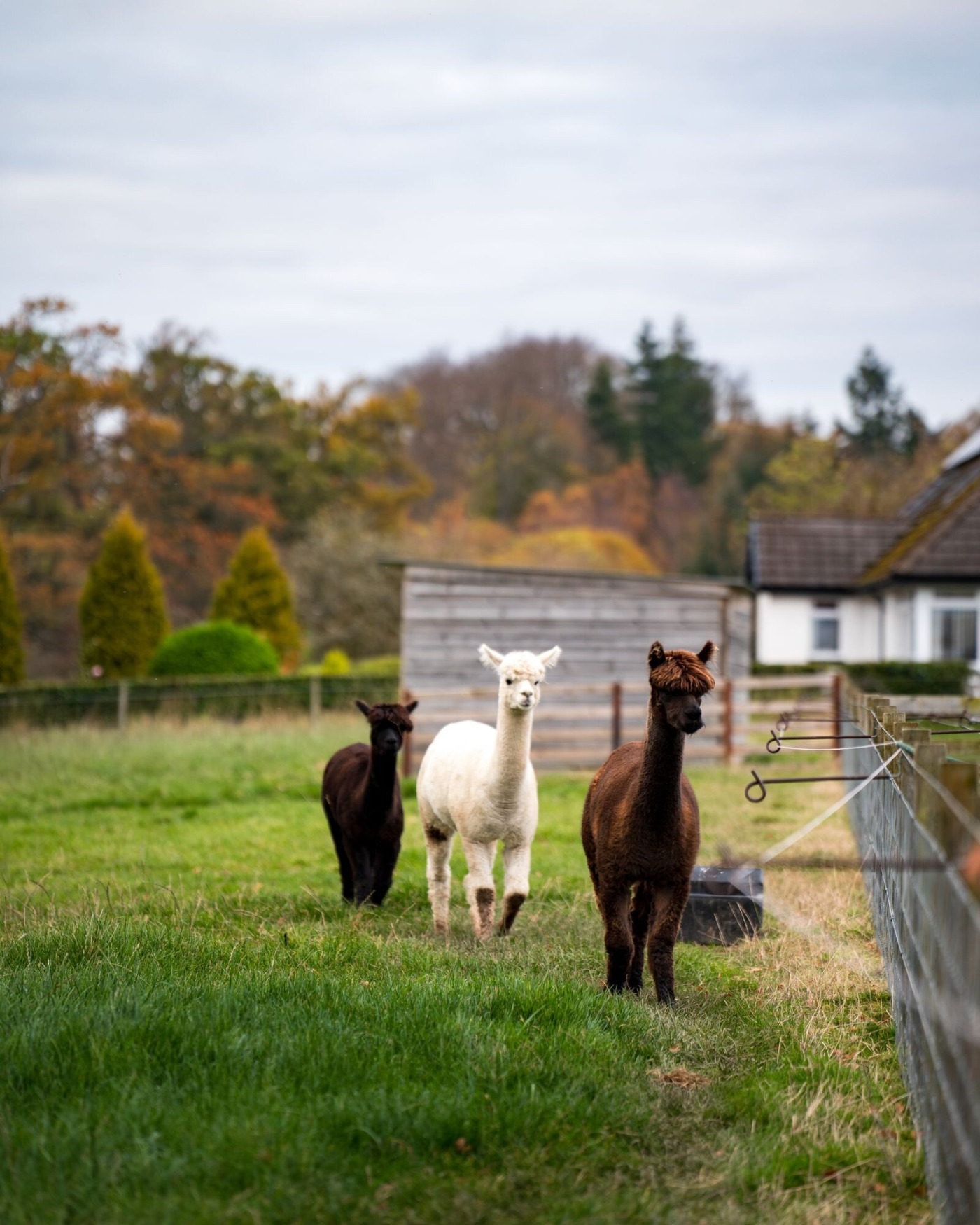
Alpacas look soft and friendly, and more and more people would like a few in their paddock. Yet an alpaca is not a pet to stroke. They are herd animals that can live for fifteen to twenty years, they need shearing, and since 2025 keepers in the Netherlands, hobby keepers included, must register where they keep them. Here you can read what alpacas really need and what to arrange before you buy.
Do you already keep other livestock, or are you weighing up species? Then also read keeping sheep or goats as a hobby, how registration works for sheep and goats in registering sheep and goats, and what another hobby animal on the smallholding needs in keeping a mini pig.
How big and how old?
An alpaca is a small camelid from South America. According to the Dutch pet information centre LICG, an alpaca stands 80 to 95 centimetres at the withers and weighs 50 to 90 kilos. The LICG gives an average life expectancy of fifteen to twenty years. You are choosing animals that will stay with you for a long time.
Never just one alpaca
The MSD Veterinary Manual writes that llamas and alpacas do poorly when isolated from their own kind or other animals. The LICG advises at least two animals: females only, or castrated males (geldings) only. Do not keep an intact male with several females. According to the LICG, the females are then mated again and again, which causes stress.
Cuddling? Better not
The LICG stresses that alpacas are not cuddly animals: they do not like a lot of touching. They can kick and bite hard. According to the LICG, they mainly spit at other animals, and at people only when they are cornered. A particular risk is the so-called berserk male syndrome. According to the LICG, males raised on the bottle or with a lot of human contact may come to see people as fellow alpacas and become dangerous as adults. So always ask how a young male was raised.
Calm training is possible. According to the MSD Veterinary Manual, alpacas can learn to wear a halter, walk on a lead and tolerate foot care.
Space, shelter and fencing
- Pasture: according to the LICG, a pasture of 2,000 square metres is large enough for two alpacas.
- Shelter: they need shelter from rain and strong sun. The LICG mentions at least two square metres of stable space per animal.
- Fence: according to the LICG and the MSD Veterinary Manual, a fence about 1.2 metres high is enough for alpacas.
- Dung pile: alpacas urinate and defecate in a fixed spot. According to the MSD Veterinary Manual, this helps limit the spread of worms.
Feeding
The LICG advises unlimited hay and grass, topped up twice a day with special llama or alpaca pellets containing the right vitamins and minerals. Fresh water must always be available. If in doubt, have the diet checked by a vet with experience of camelids.
Shearing, nails and teeth
- Shearing: alpacas cope poorly with heat. According to the MSD Veterinary Manual, shearing before hot weather is a necessity. The LICG advises shearing a huacaya (the fluffy alpaca) at least once a year. A suri (with long, hanging locks) can possibly go two years. Book the shearer well in advance.
- Nails: some alpacas hardly ever need foot care, while others need their nails trimmed every two to three months, according to the MSD Veterinary Manual. The LICG recommends having the nails trimmed by your vet, or learning it from an expert.
- Teeth: the teeth keep growing throughout life. Let alpacas gnaw on branches and twigs. Males can develop fighting teeth; if needed, these can be ground down to just above the gum.
Health: prevention and signs
Find a vet with camelid experience before you collect the animals. The LICG advises vaccination against clostridial bacteria once or twice a year. According to the LICG, deworm at least twice a year and check the droppings regularly. The MSD Veterinary Manual warns that worms in camelids have become resistant to dewormers. A faecal egg count shows whether a product still works. How this works for horses is explained in deworming your horse with a faecal egg count.
According to the LICG, dark-coloured alpacas are extra sensitive to vitamin D deficiency. The LICG recommends having vitamin D injected from October to February. Discuss this with your vet.
The LICG lists mange, worm infections, lameness, stomach ulcers and colic among the conditions seen in alpacas. Colic (abdominal pain) can be life-threatening. If you have any doubt about an animal's health, call your vet.
Two notifiable diseases deserve special attention. According to the Dutch animal health service GD, bluetongue (BTV-3) has been found in alpacas and llamas, causing illness and death. Bovine tuberculosis can also affect alpacas: the GD reports cases in North and South America and Great Britain. The LICG points out that tuberculosis can also infect people. If you suspect such a disease, call in your vet straight away.
Registration: UBN and microchip
- UBN: according to RVO, since 1 January 2025 you must register the place where you keep camelids with a unique location number (UBN). This applies to hobby keepers too. You apply through Mijn RVO.
- Microchip: every alpaca must be microchipped within nine months of birth, and earlier if it leaves the location before then. The vet does this; you may not insert the chip yourself. Older animals without a chip must still be chipped, at the latest before they move.
- Records: according to RVO, you do not need to report events in the I&R system, as you do for sheep and goats. You do keep your own records: on arrival the chip number, the date and the UBN of origin, and on departure the chip number, the date and the UBN of the destination.
Rules and fees can change. Always check the current situation with RVO before you buy or move alpacas.
Costs and buying
The LICG gives a purchase price from about a thousand euros per alpaca, and considerably more for breeding animals. Geldings are cheaper. Because you take at least two animals, your costs for shearing, vaccinations and the vet double too. When buying, look out for the following:
- Buy at least two animals that suit each other: two females or two geldings.
- Ask about the microchip, the age and whether a male is castrated.
- Ask how a young male was raised. If it was bottle-fed, be extra careful.
- Ask about vaccinations, deworming and faecal egg counts.
- Arrange the UBN, pasture, shelter, fence and vet before you collect the animals.
Ready for it? Then browse the offers on the livestock page of Nestjes. If you need to rehome alpacas yourself, honestly state the age, sex, chip numbers and whether the animals are castrated in your advert.
Sources
- LICG – Lama en alpaca (llama and alpaca) (accessed November 2026)
- RVO – UBN voor hertachtigen en kameelachtigen (UBN for deer and camelids) (accessed November 2026)
- RVO – Hertachtigen en kameelachtigen identificeren (identifying deer and camelids) (accessed November 2026)
- MSD Veterinary Manual – Management of Llamas and Alpacas (accessed November 2026)
- MSD Veterinary Manual – Herd Health of Llamas and Alpacas (accessed November 2026)
- GD – Blauwtong (bluetongue) (accessed November 2026)
- GD – Rundertuberculose TBC (bovine tuberculosis) (accessed November 2026)