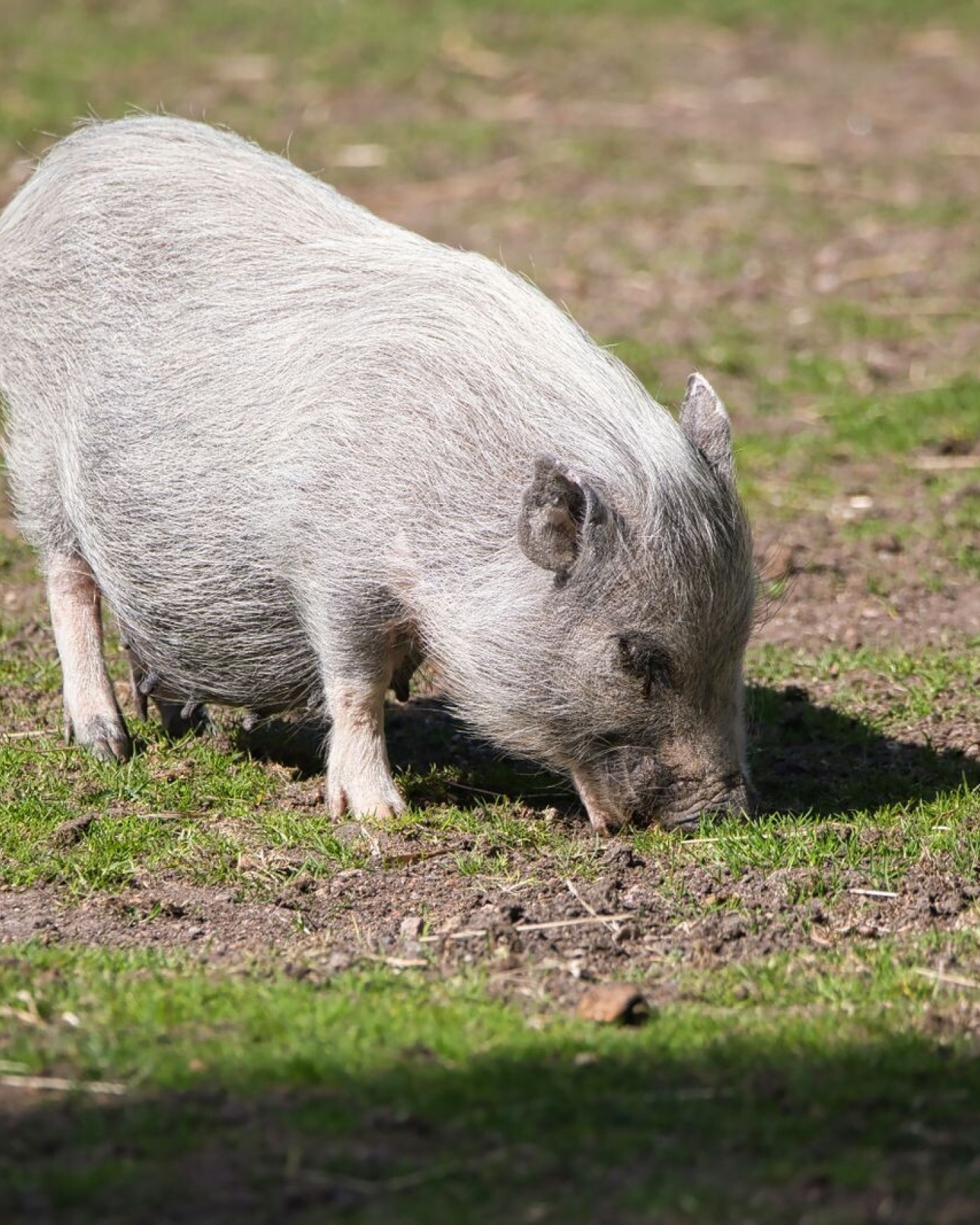
A mini pig or pot-bellied piglet looks cute and easy to handle. Yet it is not a cuddly pet for the living room or a balcony. Even small pig breeds weigh dozens of kilos, often live for more than ten years, need other pigs around them and must be able to root. On top of that, every pig in the Netherlands, even a single animal in the garden, falls under the same rules for registration, ear tags and feeding as pigs on a farm. If you know and arrange this in advance, you can enjoy them for many years.
Keeping pigs has a lot in common with other hobby livestock. So also read keeping sheep or goats as a hobby, how registration works in registering sheep and goats in the Netherlands and, if you want more animals on your plot, keeping chickens for beginners.
How mini is a mini pig?
Hobby keepers mostly choose small breeds, such as the Vietnamese pot-bellied pig, the Kune Kune and the Göttingen pig, which is also called the "mini pig". According to the Dutch pet information centre LICG, these small pigs grow to 40 to 50 centimetres tall and weigh 40 to 60 kilos as adults. That is small for a pig, but heavier than most dogs.
Be careful with words like "micro" or "teacup". According to the MSD Veterinary Manual, the term teacup pig has no strict definition. How big a piglet will become is hard to predict if you do not know the parents. Mini pigs also rarely reach their full size before they are two to three years old. A piglet that fits in your arms when you buy it says little about its adult size. The manual also warns that breeding for ever smaller size can magnify hereditary problems.
Expect a long commitment. The LICG mentions an average lifespan of fifteen to twenty years, while the MSD Veterinary Manual gives eight to twenty years for mini pigs, usually ten to fifteen. Either way, you are choosing an animal for a large part of your own life.
Never alone: keep at least two pigs
Pigs are social animals and, according to the LICG, should not be kept alone. You can keep them as a pair or in a small group. The LICG gives two castrated boars (barrows), or a barrow with a sow, as examples. According to the LICG, an uncastrated boar is not suitable as a companion pig and can be dangerous to people. If you keep him with a sow, you will also get piglets. According to the LICG, pregnancy lasts about 115 days, or "three months, three weeks and three days".
Castration also affects behaviour. The MSD Veterinary Manual advises castrating male pot-bellied pigs at two to three months of age to prevent aggression. It also notes that many pigs develop a more aggressive personality around the age of two. An adult pig weighing more than 40 kilos that pushes or bites can really injure children and adults. So discuss castration and behaviour early with a vet who has experience with pigs.
Space, rooting and a mud bath
A pig is built to search the ground for food with its snout. If you do not want your ground dug up, do not get a pig. The MSD Veterinary Manual warns that they will also root up lawns, gardens, blankets and carpets. The LICG describes how many people buy a mini pig without realising that it is a social animal that grows bigger than expected and needs natural behaviour such as rooting. If it cannot express that behaviour, behaviour problems follow.
The LICG gives these housing guidelines:
- Outdoor area: at least 75 square metres per pig.
- Shelter or stable: roughly one to six square metres per pig, depending on size.
- Bedding: so deep that it is almost as high as the pigs themselves, so they can burrow in.
- Temperature: pigs are most comfortable between 16 and 22 °C.
- Mud bath: above about 20 °C they need a mud bath to cool down.
The Dutch authorities RVO and NVWA and the animal health service GD also ask hobby keepers to provide unlimited clean drinking water, enough fresh air, opportunities to play, a sand or straw floor to root in and pens in which the animals cannot injure themselves.
A sturdy fence, also against wild boar
Pigs are strong and clever, and a poor fence will not hold them for long. A good fence also matters for animal health. Wild boar can transmit African swine fever, and the Dutch government asks hobby keepers to prevent contact between their pigs and wild boar. In its frequently asked questions for hobby keepers, the GD urgently advises a sturdy fence that your pigs cannot get out of and wild boar cannot get into. As an example, the GD describes a double fence 1.6 metres high, with a mesh of no more than 5 centimetres, buried at least 20 centimetres deep. If you live in an area with wild boar, ask the GD or your vet which measures make sense for your situation.
Feeding: no leftovers, plenty of roughage
The most important feeding rule is a legal one: feeding kitchen waste to pigs is prohibited. According to the RVO leaflet for hobby keepers, this includes cooked and uncooked food and kitchen scraps, so also leftovers from your plate. Do not give meat or meat products either. Kitchen waste and meat products have caused outbreaks of classical and African swine fever in the past. According to the NVWA, the African swine fever virus survives in pork, even when it is dried or frozen. The GD warns that the virus will certainly survive in uncooked sausage. So even a sausage sandwich that someone throws over the fence is a risk.
So what can you feed? The RVO leaflet advises that food should consist of about 80 percent roughage, such as grain, maize, tubers, carrots, grass and hay. The LICG assumes a special pig feed (concentrate) supplemented with roughage. Advice on the exact ratio therefore differs between sources. Have the diet for your animals set by a vet with pig experience, and use feed that is made for pigs.
Keep a close eye on weight. According to RVO, pigs quickly become too fat, and the MSD Veterinary Manual warns that pot-bellied pigs gain weight easily and find it hard to slim down. Overweight pigs are more likely to become lame and can develop diseases such as diabetes. Do not give high-calorie treats, and use small pieces of fruit only as a reward.
Health care: hooves, tusks and parasites
Find a vet with pig experience before you bring the animals home. Expect this routine care:
- Hooves: according to the MSD Veterinary Manual, overgrown or cracked hooves can cause lameness and infections. Walking on rough, hard ground wears the hooves down. Pigs that live indoors or rarely walk on such surfaces need hoof trimming at least once a year, or more often if needed. The pig is usually sedated or anaesthetised for this.
- Tusks: the permanent canine teeth erupt at five to seven months and keep growing throughout life. The manual advises trimming them for the first time at about one year of age and then once a year.
- Vaccination: the LICG recommends vaccination against swine erysipelas. Discuss with your vet which other vaccinations are useful.
- Worms and mites: according to the LICG, deworm regularly and have faecal tests done regularly. The MSD Veterinary Manual mentions mange mites as a risk for pigs and their owners.
According to the LICG, piglets should stay with their mother for at least 28 days, but two months is recommended for good behavioural development. If you want to breed yourself, decide in advance where all the piglets will go. A litter is made quickly, a good home for ten or twenty years is not.
Sick pig? Know the reporting duty
If a pig is ill, call your vet first. Some contagious animal diseases must be reported throughout Europe. RVO gives African swine fever, classical swine fever, Aujeszky's disease and foot-and-mouth disease as examples. According to the NVWA, African swine fever does not currently occur in the Netherlands, but it is increasingly found in surrounding countries. The virus is harmless to people, but highly contagious and often fatal for pigs and wild boar. The GD lists signs including a fever of 40 to 41 °C and bleeding in the skin, especially on the ears and flanks.
Do you suspect such a disease? Then you or your vet report it to the NVWA. According to the NVWA, you can do so on 045 546 31 88. You may not bury a dead pig yourself: according to the LICG, an approved company must collect the carcass.
Registration: UBN, ear tag and reporting
According to RVO, the identification and registration rules also apply if you keep only one or a few pigs. These are the steps:
- UBN: the location where you keep pigs needs a unique business number (UBN). If you keep at most four pigs, RVO sees you as a hobby keeper with a UBN with RE status (recreational). With five or more pigs, you apply for a different status. Piglets that are still suckling do not count.
- Ear tag: every pig must have a yellow ear tag, which you order from an approved supplier. According to RVO, piglets get their ear tag within a week after weaning and no later than three months after birth, or sooner if they leave the location earlier. According to RVO, you replace a lost ear tag within three working days. You may not sell ear tags or pass them on to someone else.
- Reporting: you register as a keeper and report the arrival of pigs to a designated database. You report movements within two working days. The databases are the Producenten Organisatie Varkenshouderij (POV) and IKB Nederland. You do not need to report the birth of piglets.
These deadlines can change. Always check the current rules with RVO before you buy or move pigs.
What does a mini pig cost?
The LICG mentions a purchase price of about 75 to 300 euros, depending on breed and age. Feed and bedding cost a few tens of euros per month per pig. On top of that come the costs of a sturdy fence, a stable, the UBN, ear tags and yearly vet care for hooves, tusks, vaccinations and faecal tests. Because you keep at least two animals, most costs double.
Buying a mini pig: what to look out for
- Ask about the parents and see them if possible. Their size tells you more about the adult size than the promise that a piglet "stays small".
- Check that the piglet has a yellow ear tag and that the seller reports its departure, so you can report its arrival at your UBN.
- Ask about age, castration, vaccinations, deworming and the feed the piglet is getting now.
- Do not buy a single pig on its own. Take two animals that get along, or make sure your pig joins an existing companion.
- Arrange the UBN, fence, stable and vet before you collect the animals.
Ready? Then browse the livestock page on Nestjes. If you need to rehome pigs yourself, be honest in your advert about their age, the size of the parents and the registration details.
Sources
- LICG – Varken (pig) (accessed October 2026)
- RVO – Hobbyhouder en gezonde varkens (hobby keepers and healthy pigs) (accessed October 2026)
- RVO – Varkens merken (marking pigs) (accessed October 2026)
- NVWA – Wat is Afrikaanse varkenspest? (what is African swine fever?) (accessed October 2026)
- GD – Veelgestelde vragen van hobbyhouders (FAQ for hobby keepers) (accessed October 2026)
- MSD Veterinary Manual – Overview of Miniature Pet Pigs (accessed October 2026)
- MSD Veterinary Manual – Routine Health Care of Potbellied Pigs (accessed October 2026)
- MSD Veterinary Manual – Providing a Home for a Potbellied Pig (accessed October 2026)
- MSD Veterinary Manual – Special Considerations for Potbellied Pigs (accessed October 2026)